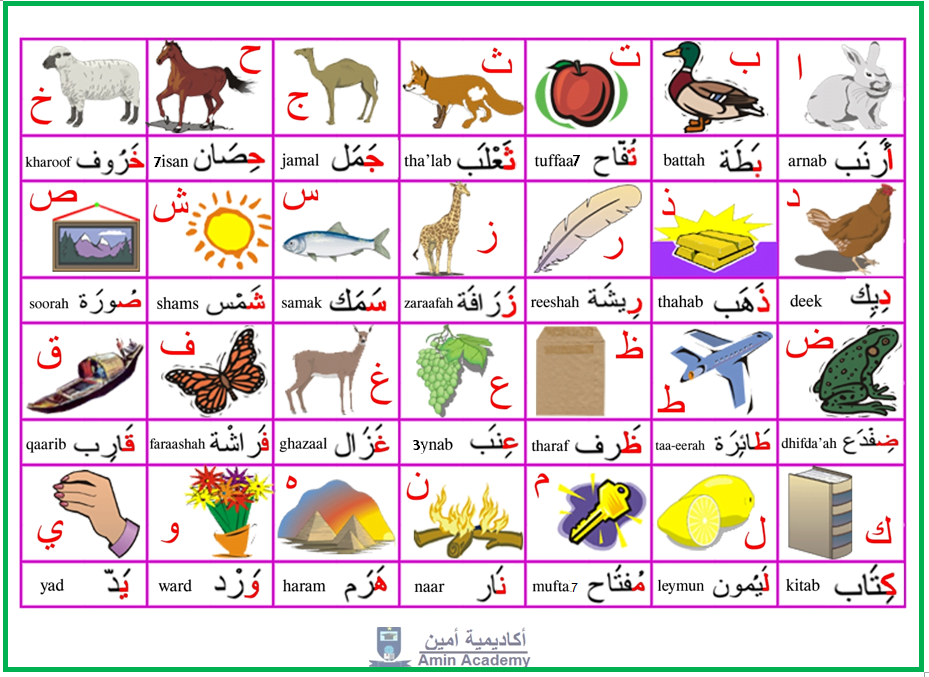
The Arabic Alphabet,
Introduction Arabic writing system, Arabic is written and read from right to left, the opposite of English.
There are no capital letters.
Arabic Alphabet – Overview The Arabic Writing System Versus the English LanguageArabic is written and read from right to left, which is opposite to the English alphabet that is written and read from left to right.In contrast to the English alphabet, Arabic does not contain capital letters. As a phonetic spelling system (all letters are sounded exactly as they are spelled), Arabic makes it simple for new learners to learn the correct pronunciation. As a result of curved letter forms being combined using ‘joined strokes, they are referred to as ‘joined letters’. Therefore, if you wish to learn the Arabic language, one of the first steps you need to take is to learn the Arabic alphabet quickly and to dedicate the majority of your time to practicing those letters that you find challenging to pronounce correctly.The hardest letters for an English speaker to pronounce correctly are the (ح=7), (ع=3), (غ=gh) and (خ=kh) letters. The various forms of Arabic letters (i.e., First form, Middle form & Final form) are included in the table below.
The Arabic Alphabet, Letters
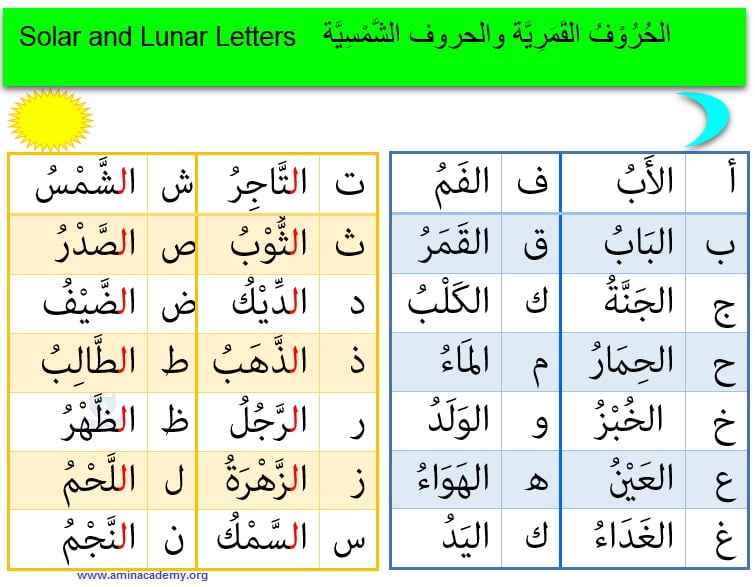
Solar and lunar letters
Vowels
Short vowels:
ALfat7a َالفتحة
Alkasra الكسرة
Aldamma ُ الضمة
Alsukuun السكون
Doubles:
ـً (Fat7atainفتحتين)
ـٍ (Kasratainكسرتين)
ـٌ (Dammatainضمتين)
Long Vowels aa ii oo uu أ و ي
The letter Alif ألف
The letter Waw ي
The letter Yaa و
*The Letter ء (Hamza)همزة
Alshadda ّ الشدة
Altanween :ً التنوين
The Arabic Alphabet has 29 letters, as they appear when written alone, each letter has two or three slightly different shapes depending on whether it is used at the beginning, middle, or end of a word
Arabic is written from right to left
The Arabic Alphabet, Vowels and Transliteration
| Trans. | End | Middle | First | Name. |
| a | ـا | ـا | أ | ا alif |
| b | ـب | ـبـ | بـ | ب baa |
| t | ـت | ـتـ | تـ | ت taa |
| th | ـث | ـثـ | ثـ | ث thaa |
| j | ـج | ـجـ | جـ | ج jiim |
| 7 | ـح | ـحـ | حـ | ح 7aa |
| kh | ـخ | ـخـ | خـ | خ khaa |
| d | ـد | ـد | د | د daal |
| dh | ـذ | ـذ | ذ | ذ dhaal |
| r | ـر | ـر | ر | ر raa |
| z | ـز | ـز | ز | ز zaa |
| s | ـس | ـسـ | سـ | س siin |
| sh | ـش | ـشـ | شـ | ش shiin |
| S | ـص | ـصـ | صـ | ص Saad |
| D, DH | ـض | ـضـ | ضـ | ض Dhaad |
| T | ـط | ـطـ | طـ | ط Taa |
| DH | ـظ | ـظـ | ظـ | ظ dHaa |
| 3 | ـع | ـعـ | عـ | ع 3ayn |
| gh | ـغ | ـغـ | غـ | غ ghayn |
| f | ـف | ـفـ | فـ | ف faa |
| q, g, j | ـق | ـقـ | قـ | ق qaaf |
| k, ch | ـك | ـكـ | كـ | ك kaaf |
| l | ـل | ـلـ | لـ | ل lam |
| m | ـم | ـمـ | مـ | م miim |
| n | ـن | ـنـ | نـ | ن nuun |
| h | ـه | ـهـ | هـ | ه haa |
| ء | همزة hamza | |||
| w, oo,uu | ـو | ـو | و | و waaw |
| y | ـي | ـيـ | يـ | ي yaa |
As you learn more about Arabic, you may have asked why, when the definite article ال (el) is used, the pronunciation of the ل (laam) often differs?
For example, when saying the word القَمَرْ (el-qamar) –the moon, the ل (laam) in ال (el) is clearly heard, but when saying the word الشَّمْس (esh-shams) –the sun, it sounds like the ل (laam) has been replaced by the ش (shiin
Gulf Arabic Pronunciation
خ = kh/ ح=7/ /.
3 =ع/
gh=غ.
Gulf Arabic
/ق/=Q/ or
/ق/=g/
/ gh=غ.
/ج/ sometimes yaaي or Ja
/ك/=K or Ch
Vowels
Gulf Arabic vowels present no particular problem to an English speaker.
There are three types of vowels: short vowels, long vowels and
diphthongs:
Short vowels:
Short vowels: a i o u ( ُ)( ِ)( َ)
In Arabic, short vowels are not letters. they are diacritics (or symbols) whenever they are used together , they change the pronunciation of each letter
َالفتحة
AlFat7a
This first vowel is a َ (fat7a). it’s a short diagonal dash which is placed above the letter that it corresponds to within a word. It makes a short a sound, as compared to the ا (alif) which makes a longer aa sound.َ7 (Fat7a)
Let’s look at how َ (fat7a) is pronounced with a letter:
AlKasra الكسرة
This second vowel is ِ (kasra). It’s a short diagonal dash, just like َ(fat7a), but it’s placed under the letter that it corresponds to within a word. It makes a short i sound, as compared to the ي (yaa) which makes a long ii (or ii) sound.
(Kasra)
| بَ ba |
Let’s look at how ِ (kasra) is pronounced with a letter:
| بِ bi |
ُ الضمة
Damma
This third vowel is a ُ (damma). It looks similar to the letter و (waaw) but is much smaller and is placed above the letter to which it corresponds within a word. It makes a short u sound, as compared to the و (waaw), which makes a long uu (or uu) sound.
ُ(Damma)
Lets look at how ُ (damma) is pronounced with a letter:
| بُ bu |
Doubles
Occasionally these short vowel signs (fat7a,فتحة kasra,كسرة and dammaضمة) will be doubled and written twice, one on top of the other. When this happens, it gives the vowel a final n sound.
ـً (Fat7atainفتحتين)
ـٍ (Kasratainكسرتين)
ـٌ (Dammatainضمتين)
Let’s look at some examples:
| بً ban | |
| بٍ bin | |
| بٌ bun |
بً
بٍ
بٌ
Note that these double vowel signs only come at the end of a word, never at the start or in the middle. They occur more commonly in Classical or Modern Standard Arabic, but occasionally they are used in Gulf Arabic Arabic as well.
ْ السكون
Sukuun
A ْ (sukuunسكون) is a small circle that is placed above the letter to which it corresponds. It represents a short pause, kind of like the pause between syllables.
ْ (Sukuun)
Let’s look at how ْ (sukuunسكون) is pronounced with a letter:
اَبْ
ab
ّ الشدة
Shadda ّ
Shadda. It looks like a handwritten w. Humanized Arabic Alphabet. The letter شدة (shadda) has a similar appearance to a handwritten letter “w.” Therefore, شدة (shadda) is placed above any letter and carries the meaning of that letter being pronounced twice. Unlike “English,” where a letter may be duplicated to show double pronunciation, ” الشدة (shadda)” simply shows that the letter will be pronounced twice. Let’s take a look again at how ” الشدة (shadda)” is pronounced with a letter. (شدة) اَبَّ (abba) – You can see that the letter ب (ب) has the شدة (shadda) on top of it, creating a longer “ب” (bih) sound for “abba” rather than just (b) or the shortened sound of the letter mentioned above. This may be confusing to you now, but probably will not be in the very near future! In our next section “Writing,” we will look at the Arabic Alphabet! You will start to see the changes in how to pronounce letters as a result of the ضربت (shadda) adding to the pronunciation. Until that time Long Vowels. The letters (ا)( أ, /و)( وَ, ) should be (و تي )( و, ), which will all produce long vowel sounds, but produce them longer than normal short vowels. These three letters (ا, و , ي) are long vowels, and just like short vowels have a specific (short) sound attached to them; in addition long vowels will produce a longer version (of the normal sound of the short vowel sound).
Letter ا (Alif)
The ا (Alif) is simply drawn as a vertical line, and is pronounced either as “a” as in apple or “a” as in banana. A ء (hamza) can be positioned above the ا (Alif) (أ) or below the ا (Alif) (إ). The effect of the above mentioned position of the hamza on pronunciation is discussed later in this lesson. In an earlier lesson, we spoke about those letters that are “unfriendly” by not connecting to any letter that follows them to the left; ا (Alif) (ألف) is no exception! It does not link to those letters that follow it to the left, but it can connect to those that precede it to the right. No matter where you write the ا (alif) (beginning, middle, or end of a word), it has essentially the same general shape. However, when writing words that have the ا (alif) in them, you may sometimes see that the ا (alif) will need a slant/curve to touch the previous letter (known as ‘joining line’). Let us explore what we hear and see! We will take a closer look at the vowels in the word اِحْنَا (i7naa) for review purposes. As per our previous discussion about vowels; the ا (alif) at the beginning of اِحْنَا (i7naa) has what appears to be a tiny dash located at the bottom of the letter. This tiny dash is known as a kasra and gives the letter an i sound. Subsequently, the letter ح (7aa) appears to have a dot above it. This is known as a sukuun and denotes the end of the syllable. To finish, we have the ن (nuun) with a short dash on top of it. This tiny dash denotes a fatḥa and allows for an a sound to be assigned to the ن (nuun). For those of you who require a refresher on any of the above vowels, please see the Section on Short Vowels. The Letter ء (Hamza)همزة
Letter Hamza ء Previously in this lesson we discussed that Arabic alphabet letter a sometimes contains an Arabic alphabet letter ء (hamzah) with it. So let’s look more closely at this letter that is part of the Arabic alphabet. The ء (hamzah) is considered a glottal stop, or sound made with the vocal cords. It can either be written alone or combined with any of the Arabic alphabet long-vowel letters including a , w, or hi. The manner in which the ء (hamzah) is pronounced as a glottal stop will change depending on which vowel letter the ء (hamzah) is “attached” with; in general the most often written combination will be with a . The letter Hamza looks like a small circle partially open with a small horizontal line under it, almost resembling a claw on a crab or lobster! When the ء(hamza) is written alone it has no actual sound itself, but is pronounced according to the vowel letter it is combined with. Again, most commonly used in combination with the letter a . So far we have some examples of the letter ء(hamza): one example has a َ (Fatha فتحة) or short “a” sign on top of a . In this case it will sound like a true normal “a” sound. In another example the ء(hamza) is located under the a letter. In this case a will be combined with a ِ (Kasraksrah كسرة). In this instance, a “simple i” sound (like pin) is how you’re going to pronounce this. ا u For the example above، ت (hamza) is placed over the ا (alif) with a ُ (Dammah) over it. That gives you a short u. The most relevant information about the letter ء (hamza) is that you should concentrate on what vowel is associated with the letter! That is the sound you should be making! Today’s lesson is done, but we will pick up with the next letter of the Arabic Alphabet the next time! Talk to you later! When a letter must connect with an ا (alif), it will always connect via this joining line, and thus, an ا (alif) will always appear as follows: ـا The Arabic letter و (Waaw) represents a vowel. If you place a ُ (ḍamma) before it, you get the long form of the letter: the pronunciation will be similar to /uu/. An example of how the letter و(waw) is written and pronounced: [pic]. As you can see this is the form of the letter when it is at the start of a word. As the letter is uncurled, it will not have a tail curving to the left. Therefore, the letter will not be connected to any letters following it and does not need a tail extending out to the left. For further understanding, let’s proceed with some examples: وَرَا ‘Waraa’ means “behind”. In the middle of a word, و which is pronounced “Waaw” maintains the same shape and simply connects to the preceding letter with a connecting stroke (line), as shown below: مُوز ‘Mûz’ means “banana(s)”. You may observe that و is immediately following a ُ which is on top of م. The combination of a ُ and و makes for a long [uuu] sound. قَهْوَة ‘Qahwah’ means “coffee”. At the end of a word, و connects to the preceding letter with a connecting line, similarly to when it was in the middle of the previous word: مَايُو ‘Mayū’ means “May”. اِنْتُو ‘Intaw’ means “you”.
Letter Yaa (ي) The Arabic letter yaa (ي) is shaped like a long curve that looks slightly like a sideways ‘s’. This letter also has two dots beneath it. Because of its friendly or jolly nature, yaa can join with other letters that come either before or after it. Yaa, as well as alif (ا) and waaw (و), is one of three Arabic letters that can perform a vowel function. Like the letter ي), yaa also has a long ii-producing sound when it follows ِ (kasra). Let’s take a look at how yaa (ي) is written and pronounced. It is common knowledge that the letter “ي” in Arabic represents the letter “Y” in English. Its initial form is different than how it looks in the middle or end of a word. Instead of using a long curved font at the beginning of a word, it has a vertical line with a dot or dots below it. There is an extension to the left side of the vertical line for the letter “ي” at the beginning of a word, allowing the letter “ي” to connect to the letter that follows (for example “ك” (k) ). Examples of this are: يوم (yoom) = “Day” يمين (yimeen) = “Right (Direction)” As you can see, the letter “ي” (y) in both of these examples is followed by the letter “ك” (k) with a letter “ا” (a) appearing below the letter “م” (m). This combination creates the proper pronunciation for both words.
Let’s look at some examples.خِيَارkhiyaar cucumberبَيْت beythouse
At the End of a Word: ـيWhen ي (yaa) is at the end of a word, it keeps its curving tail with two dots underneath. The top part of the ي (yaa) is flattened to connect to a joining line, like this: ـيكُرْسِيkursiichairdiphthongs (ay, aw)As the name implies, a long vowel (like a doubled consonant) lastslonger than a short one: in English, cat contains a short a and cartcontains a long one. This distinction in vowel length is made in thespelling system used in this book by writing the long vowels as a doubleday bayt بيت sayfaw gaalaw قالو3awwar عوّر:ً التنوينTanwiinYou may have noticed that some words such as the word for thank you شُكْرًا (shukran) are not written with an ن (n) . The same can be said of the word for you’re welcome عَفْوًا (3awfan). It is written with an alif ا (a) instead – so why is there an n sound?